
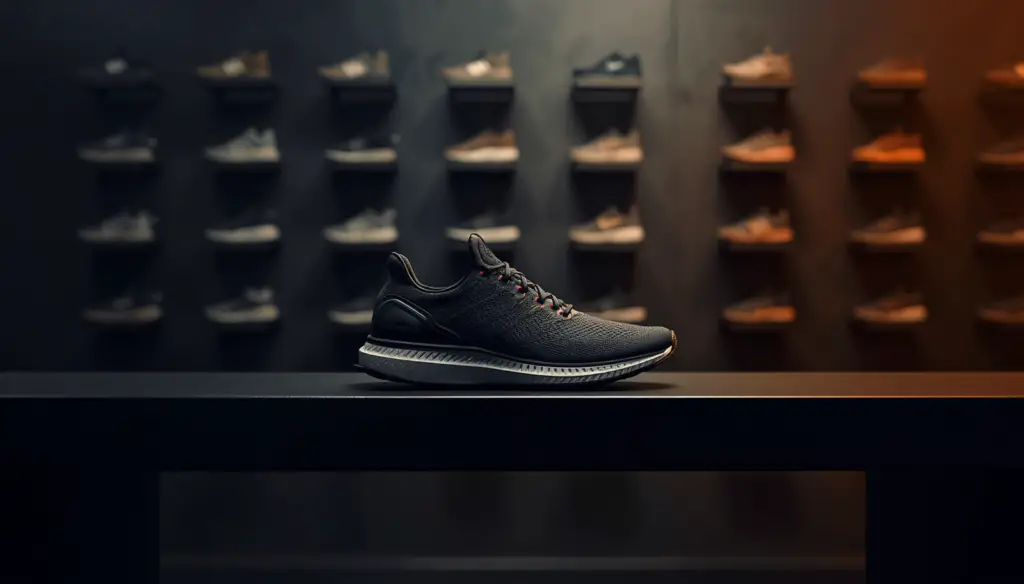
Walk into most sports stores in South Africa and you'll see the same thing: walls of brands chosen because a sales rep landed a good margin, a distributor pushed hard, or a billboard somewhere convinced a buyer it would shift units.
That's not how MOVE works.
Every brand on our shelves is there because it earned the right to be there. Not because someone paid for the shelf space. Not because the logo is trending on Instagram. Because it passed a standard we set — and we set it high on purpose.
If you're going to spend R3,500 on a pair of running shoes, R8,000 on a wetsuit, or R600 a month on race-day nutrition, you deserve to know how those products got into the room with you in the first place.
So here's how we do it.
The Problem With How Most Stores Stock Gear
The endurance sports industry is loud. New shoe technology every six months. A new electrolyte brand on every running influencer's grid. Carbon plates, super foams, AI-tuned watches, gels that promise to make you faster, recovery boots that promise to make you younger.
Most of it is noise.
And most stores can't tell the difference — or won't. They stock what reps push, what discounts hard, what photographs well. The customer walks in trusting the recommendation, walks out with the wrong shoe, gets injured at 35km of a marathon they've been training for since January, and never knows the shoe was the problem.
We've seen that story too many times. It's the reason MOVE exists.
The brands on our shelves aren't there because they paid to be there. They're there because we'd put them on our own feet, in our own bottles, on our own faces at 30km in. If we wouldn't trust it on race day, we won't sell it to you.
The MOVE Standard: Four Filters Every Brand Has to Pass
Before any product gets stocked, it runs the gauntlet. Four filters. No exceptions, no favours, no exclusivity deals that override the standard.
1. Does It Perform Where It Matters Most — On the Athlete?
Marketing claims don't count. Lab data is a starting point, not a finish line. The real test happens on tar, in the pool, on the trail, in race conditions.
Every brand we stock has been tested by athletes who train hard and race hard. That includes us. Before a shoe makes it onto our wall, someone on the MOVE team has put serious mileage into it. Before a nutrition brand makes it into the fridge, someone has used it through a long session and a hard race.
If the gear doesn't deliver under pressure, it doesn't matter how good the brochure looks.
2. Is the Brand Built on Substance or Hype?
Some brands have decades of biomechanics research behind them. Others have a slick website and three Instagram ambassadors. There's a difference, and you can feel it in the product.
We look at the company behind the logo. How long have they been doing this? Who's designing their products — engineers and athletes, or marketers? Do they update their range based on real feedback, or just rebrand last year's model in new colours?
The brands that earn shelf space at MOVE have answered those questions properly. Brooks has been refining running biomechanics since 1914 — they didn't show up because carbon plates got trendy. Altra built an entire shoe philosophy around foot anatomy when the rest of the industry was still building narrow toe boxes. 226ERS built their nutrition range with sport scientists for ultra-distance athletes who can't afford a stomach disaster at 80km in.
Substance, not hype. Every time.
3. Does It Match the Athletes We Actually Serve?
MOVE doesn't try to be everything to everyone. We serve runners, swimmers, triathletes, and the broader endurance community in Middelburg, eMalahleni, Secunda, and the surrounding region. That's it.
So we ask: does this brand make sense for a runner training for a half marathon in winter? For a triathlete swimming a 1.5km open-water leg in the Vaal? For a beginner doing her first 10K and a sub-3 marathoner chasing a PB on the same Saturday morning?
If the answer is no, the brand doesn't make the cut. We'd rather stock fewer products that serve our athletes deeply than more products that serve nobody well.
That's why you'll find Balega socks on our shelves — proudly South African, built for runners who put in the kilometres. MadWave swimwear for athletes who actually train in the water, not just stand next to it for the photo. Rudy Project eyewear and helmets because the engineering matches what triathletes and cyclists put their gear through. FitGen for the recovery side — supplements built for endurance athletes who train consistently and need to actually absorb what they're taking.
Every brand answers a real question one of our athletes is asking.
4. Will the Brand Stand Behind It If Something Goes Wrong?
Stuff breaks. Wetsuits tear. Shoes fail prematurely. Watches glitch. The question isn't whether things go wrong — it's what happens when they do.
Before we partner with a brand, we look at their warranty terms, their distributor relationships in South Africa, their turnaround on replacements. We've cut brands that looked great on paper but disappeared the moment a customer had a legitimate complaint.
You can buy from MOVE knowing that if something doesn't perform the way it should, we'll fight for you. And the brands we stock will back us up — because we only stock brands that operate that way.
What This Means for You, the Athlete
You don't have to be a gear expert to walk into MOVE. You don't need to know the difference between a 4mm and a 10mm drop, or whether your gait calls for stability or neutral, or whether you should be taking sodium citrate or sodium bicarbonate before a race.
That's our job.
Because every brand on our shelves has already passed our filters, you can spend your energy on the questions that actually matter for you:
- Which of these vetted shoes fits my gait, my training volume, and my goals?
- Which nutrition strategy works for my stomach and my race distance?
- Which wetsuit, watch, or sock setup matches what I'm actually trying to achieve?
You get to focus on becoming a better athlete instead of trying to become a part-time product researcher.
And when our staff recommends something to you, it's because that product has been earned its way into the conversation — and because we know how it fits into your specific picture.
The MOVE Promise
We will never sell you something we don't believe in. We will tell you when a brand isn't right for you — even if it costs us the sale today. We're playing the long game. We want you racing in our gear in five years, not regretting a purchase in two months.
Why This Approach Is Different — And Why It Matters Now
The endurance sports market is more saturated than it has ever been. There are more brands, more products, more claims, more noise than at any point in our sport's history. The athlete who tries to navigate it alone is either going to burn money on the wrong gear or freeze and buy nothing.
What MOVE offers is a curated wall — a shortlist already vetted by people who train, race, and live this. When you shop with us, you're not browsing a warehouse. You're browsing a recommendation list.
That doesn't mean every product on our shelves is right for every athlete. It means every product on our shelves could be right for some athlete — and our job is to figure out which products fit which person.
That's what the MOVE System is built for. Observation tells us how you move. Education arms you with the why. Visualization connects your gear choices to the goals you're chasing. Mind keeps you committed to the long game — even when the next shiny new shoe drops.
Every brand we stock fits inside that system. If it doesn't, it doesn't belong here.
Come See for Yourself
The next time you walk into MOVE, look at the wall and ask: why this brand?
We'll tell you. Every time. With the data, the experience, and the honesty you deserve.
Visit us in-store | Book an AI Gait Analysis | Ask us anything
This isn't just gear. This is a curated shortlist of what works.
Welcome to MOVE.
Read next:
- The MOVE System Explained: Mind, Observation, Visualization, Education
- Why Most Athletes Plateau (And What to Do About It)
- Coming next: What Is Gait Analysis and Why Should Every Runner Get One?